| |
2026 Update underway. Start here.
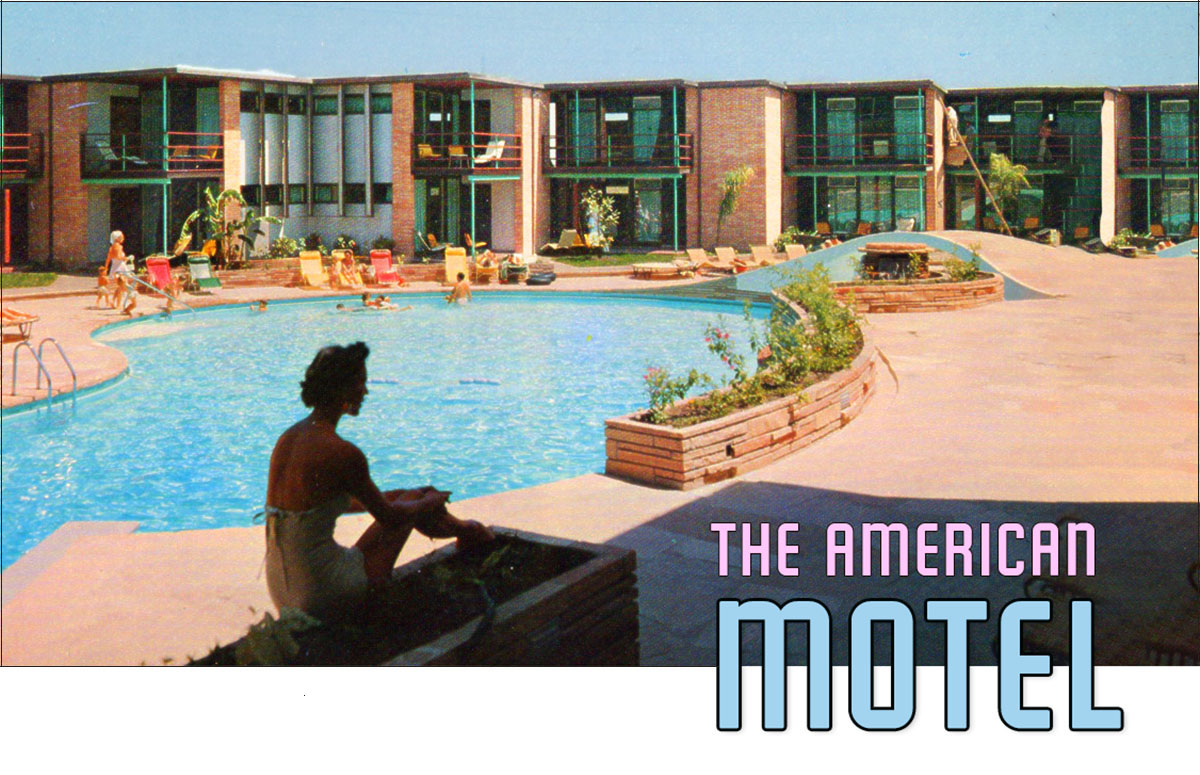
Nostalgia for old motels, like most forms of nostalgia, is selective and dishonest. We like to imagine a pure world before the soulless hotel chains took over, a landscape of lovely neon, local charm, and individuality. No doubt this was the case, occasionally, in the 50s and early 60s, but it was only part of the story. Standardization has its benefits. Franchise outfits have their rules. Every Holiday Inn may feel the same, look the same, but you're reasonably sure there won’t be bugs in the mattress or Norman Bates peeping through a crack in the bathroom tiles.
A motel was only as good as the people who ran it. I’ve spent a lot of nights in cheap motels; I remember scratchy sheets, creaky beds, TVs that wobbled on their stand. Old soap. Nubby blankets. Pillows as thin as a small-town Sunday paper.
But. There’s something to be said for these humble places. Not because they were better, but just because they were the norm. This is the way things used to look, and that’s reason enough to pay attention.
Most of these motels hail from the Middle Era of Motorized Mobility, the 50s and 60s. There were motels in the 20s and 30s, but they were likely to be a collection of shanties and cabins with a humble sign out front. In the 50s and 60s the sign took on great prominence; it was a way of establishing identity and rank even when no other feature of the motel was unique. The sign didn’t just sell the place; it was the place.
Many of the signs want to be the Holiday Inn sign, as if to tie themselves to the standards and promise of the franchise behemoth, and protect themselves from its power. Most of the motels lost the battle, and nowadays we distrust the motel that stands alone. Most of these places are gone or renamed.
But we still have the cards.
--Lileks 06.04.15
|
|
|
|