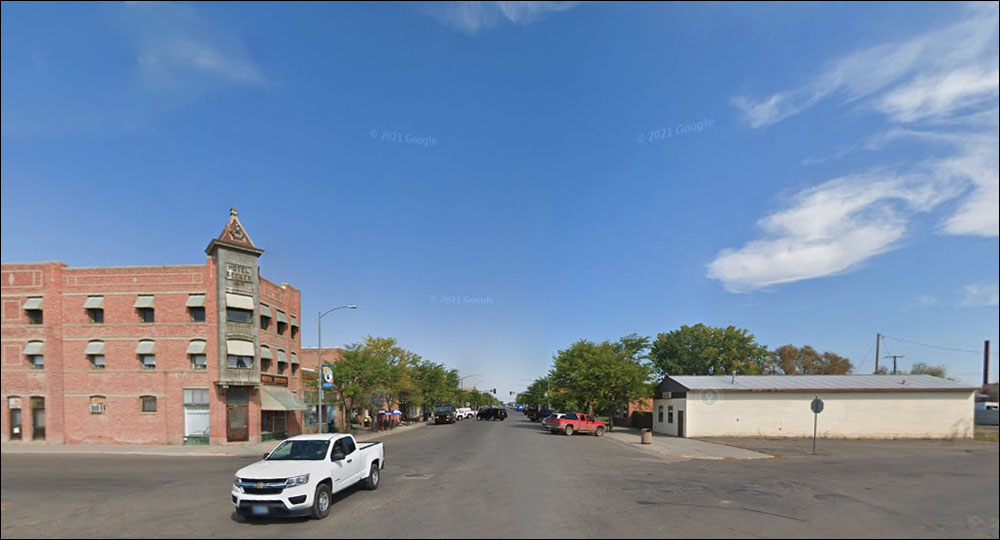
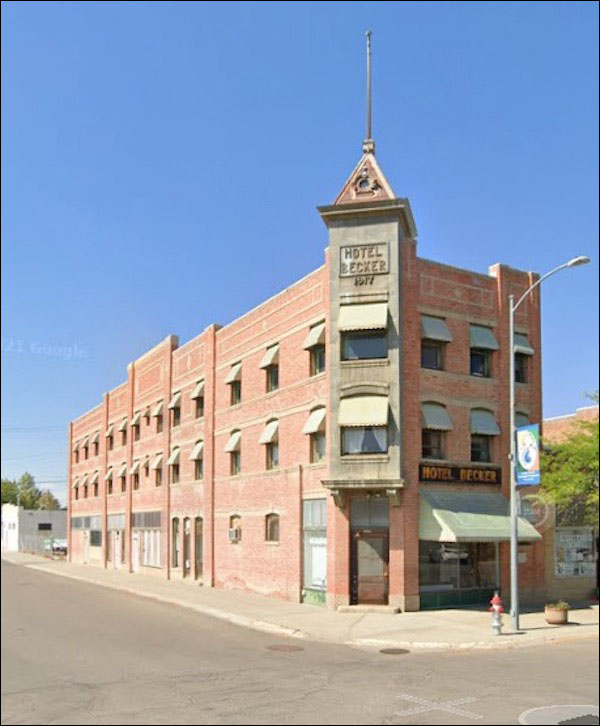
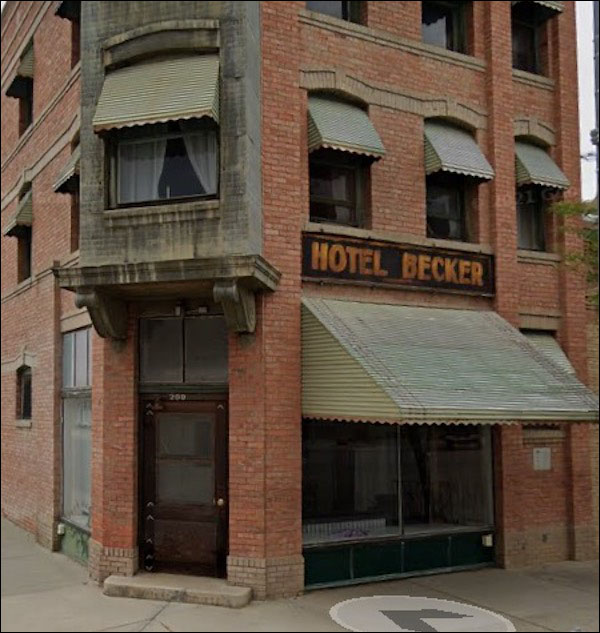
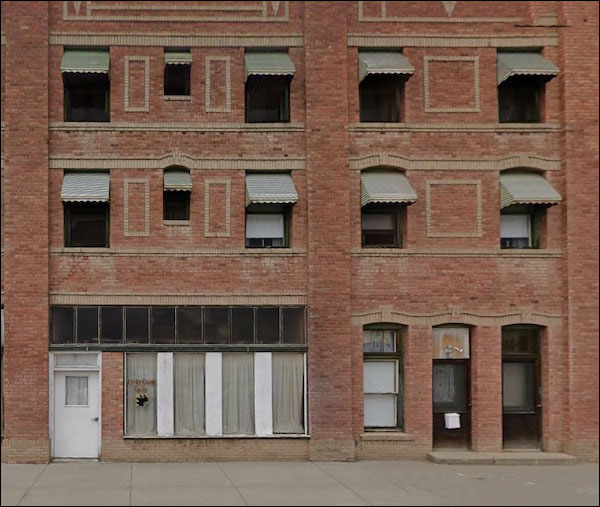
 Thirty-eight hundred souls. Named for a friend of the developer. Got a sugar-beet processing plant in 1937, and they have my sympathies; those things stink. Thirty-eight hundred souls. Named for a friend of the developer. Got a sugar-beet processing plant in 1937, and they have my sympathies; those things stink.
Not much today. Not sure why I went here. We’ll see if there’s a good reason.
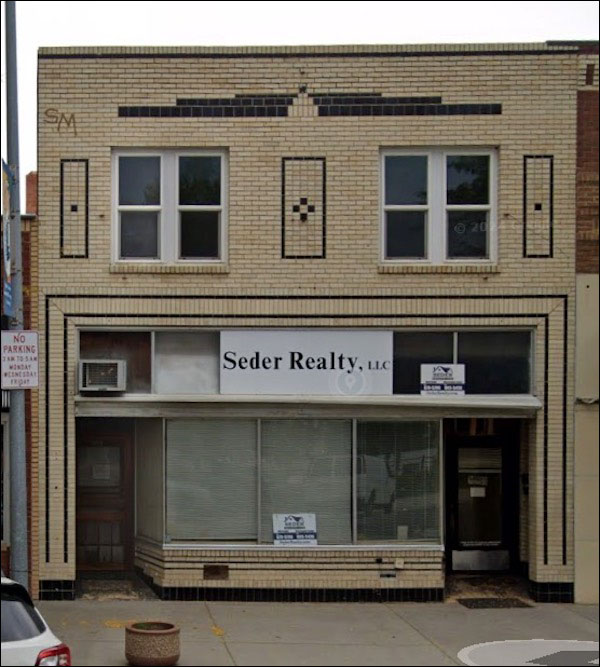
How to make a featureless ordinary building distinctive with one stroke:
I’m not feeling so good about my online booking
I’d bet a sawbuck the small window is the shared bathroom.
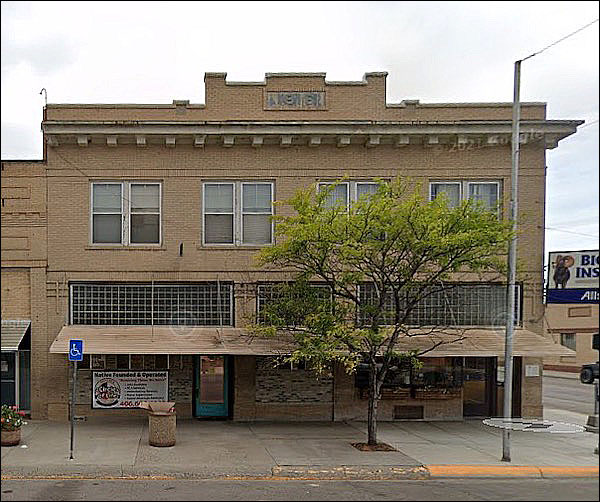
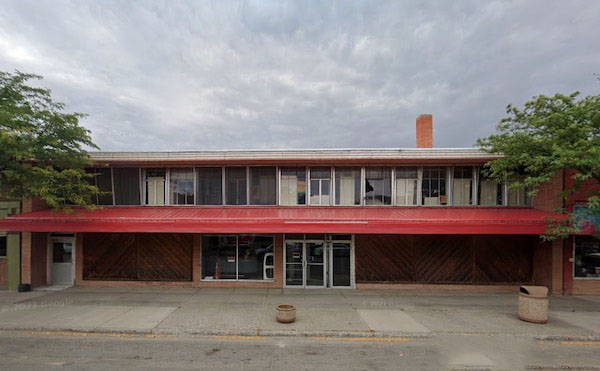
The awnings suggest it’s still in business. But Google says it’s permanently closed.
It really does add something to the town, and it’s a town that needs it.
History here, if you wish. It’s not that interesting. But not everything has to be,

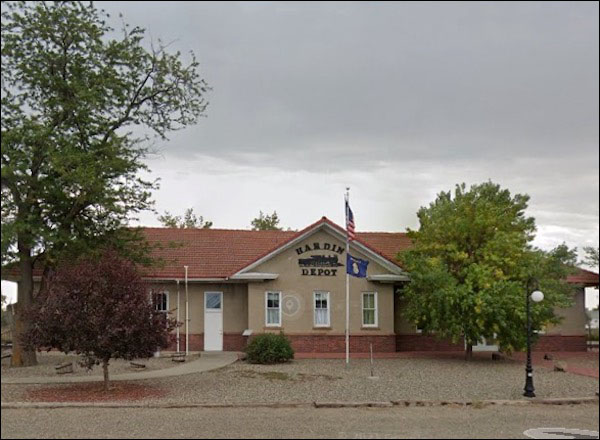
An unusually modern looking depot. I suspect it was modernized after its original purpose ended.
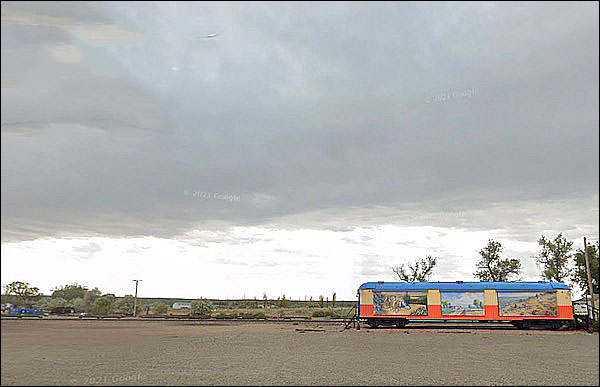
When you see something like this around a depot, you know it's not a going concern.
As we like to say: you can do a lot on the cheap with bricks.
There's something about this structure that's absolutely rote and by-the-numbers, but it's also a nice piece of work.

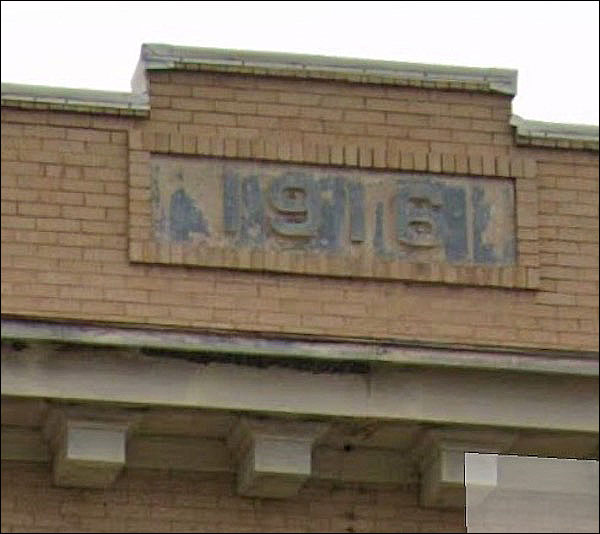
1916.
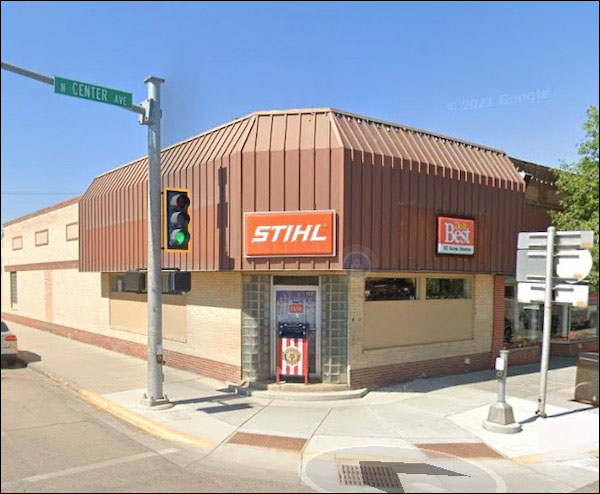
Let's go around the corner. Hello:
Not that there’s anything - oh, never mind.
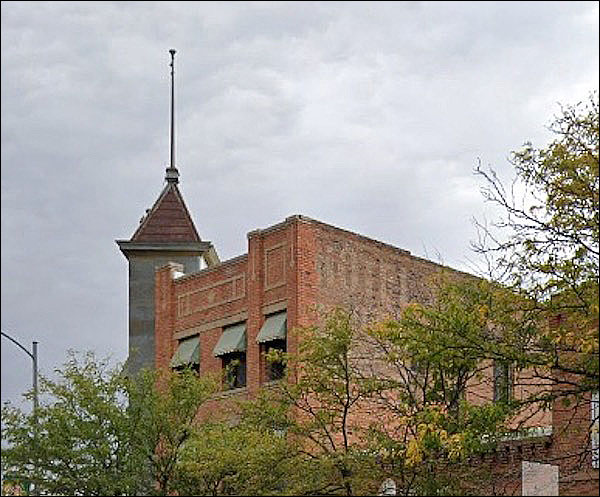
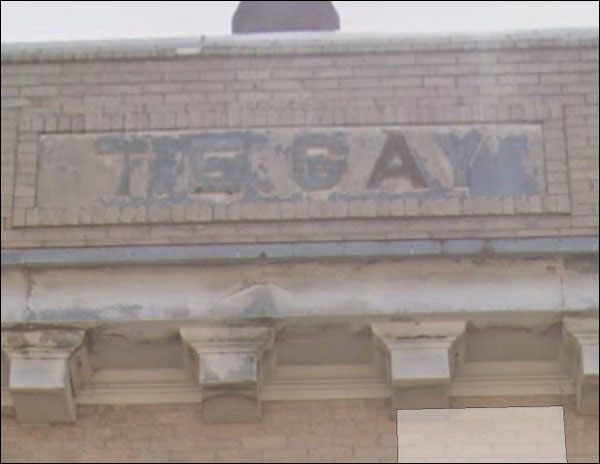
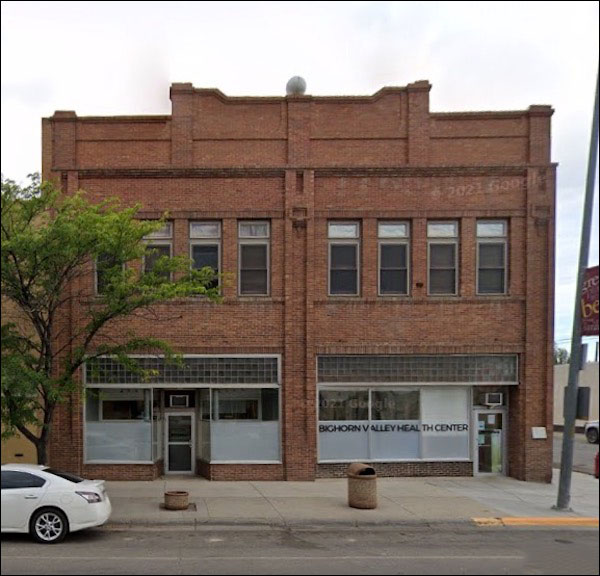
As the town’s history site says:
On May 4, 1917, Hardin celebrated the “formal opening of the Gay block . . . with a grand ball in the south store room of this magnificent structure.” The storage area’s hardwood floor was perfect for dancing, and construction of the two-story brick business block merited a celebration. Merchant T. E. Gay had hired the Billings architectural firm of Link and Haire to design the structure, only the second architect-designed building in Hardin. His investment in the $50,000 business block reflected his confidence in the town’s future.
Oh of COURSE the bubbles were animated.
Er -
Maybe it’s been repurposed as a phone company switching operation? That’s usually the explanation for buildings that have been completely closed up.
80s metal overhang obscures the original purpose of the building:
I’d bet it was a bar / restaurant. The windows suggest as much.
Once upon a time.
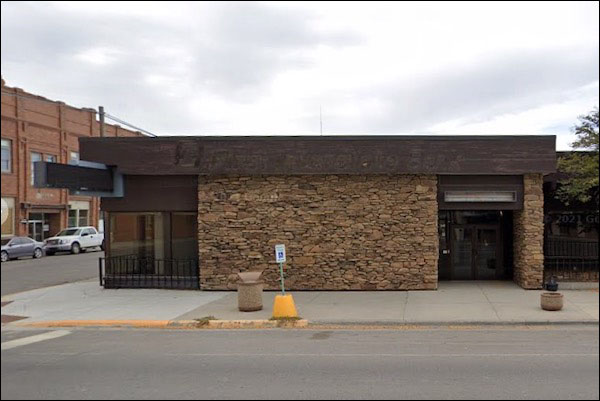
Ill-advised faux-stone rehab.
Boring though it may be, at the time it was a sign of progress. Very modern!
The 20s version of the low ordinary post-war building.
The Lee Building. It housed a bank and a drug store.
The bank closed in 1923 as a result of the “agricultural depression.”
OUMB.
And that’s it. There’s enough there so the residents in the heyday of downtown could be pleased and proud.


|