Not my favorite day. That’ll happen. It goes like this:
I can do this!
I guess I’ll do it
It appears I have to do it
Yeah, doing it, again
I don’t want to do this
More doing it tomorrow, I guess
I can do this but I don’t want to do this here
And so on. Lots of work to keep me busy - had to get out two pieces in the morning, write a third in the evening, and contend with some hard truths about the Zork Storage Situation, a weary revelation with which I’ll bore you another day. Two long walks to get Birch to poop. LONG walks. How I miss opening the door and letting him go out, but no. Everything is 32% more difficult now.
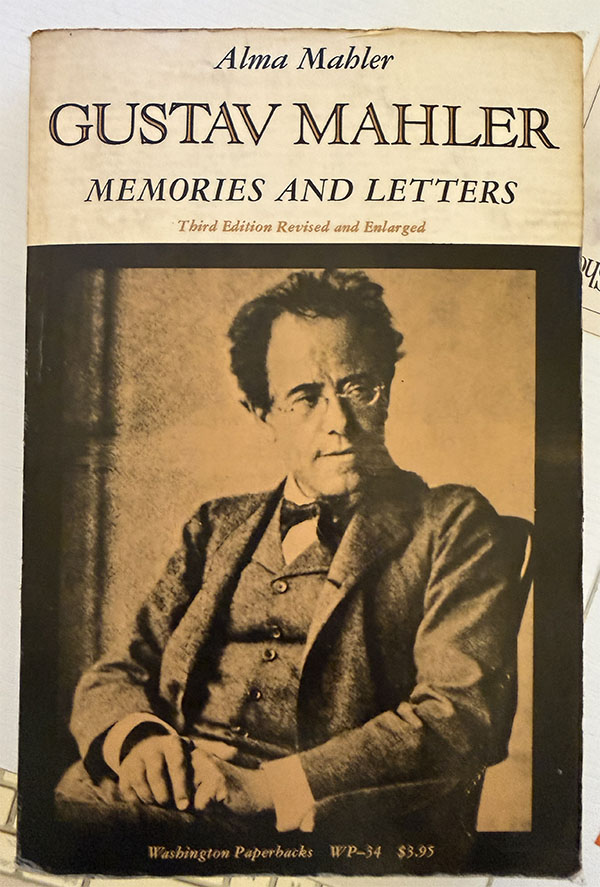
While doing the obligatory winnowing, I paged through one of the hallowed texts of my youth.
I worshipped Mahler when I was in my teens and 20s. Still do, in many ways. I once asked Dennis Prager if he had to choose between Mahler and Bruckner, and he said the latter, and I agreed - except I think we were both lying. Yes, Bruckner for his titanic soaring peaks and thunderous power, the sound of the soul being elevated to Olympian heights! But Mahler is the street and the forest, the over-emotional soul in misery and the sarcastic wit and, in the end, the dying man whose wife cheated on him. (Bruckner was wierd about the girls.) The 19th century died with Mahler, and the 20th century was born in that horrid chord of the 10th. ANYWAY, this book was the only thing I had to read about my hero, and I read it over and over. I think I knew how self-serving it was. A piece of work, that Alma. And a piece of work, that Gus: in rereading portions now I’m reminded that he comes across as both infantile (to her) and a jerk (to others), the latter explained as a manifestation of genius. I think you can be a genius and be a nice guy, too.
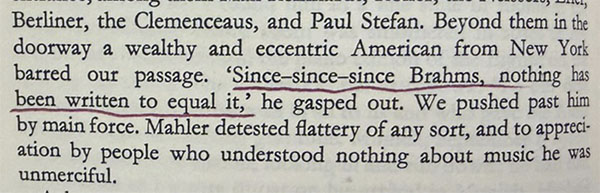
There was one passage that stuck out:
We don’t know - or at least, Grok insists we don’t know - who that man was. I always wondered how he felt about that. Abashed? Embarrassed? Peeved? Did he go home and say he’d met Mahler and discussed the 8th? I mean, we all can put ourselves in his shoes, and feel the sting and flush of shame as you think oh stupid stupid what a stupid thing to say, I should have just nodded and let him pass, but no. ‘Not since Brahms.’ Stupid.
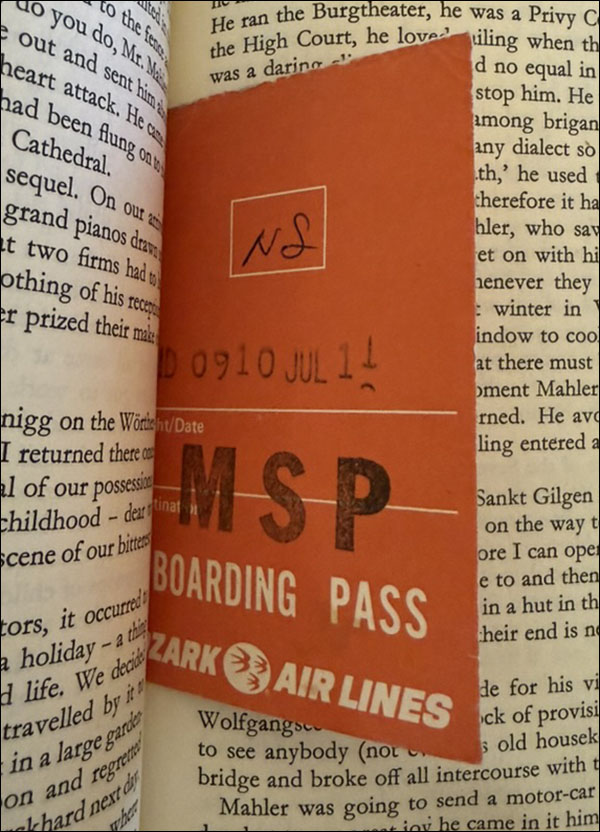
These are the things I slipped in the pages over the years.
I suspect this was the plane trip back from Nashville, after I'd ended my job with Northrup King in the summer of 1979.
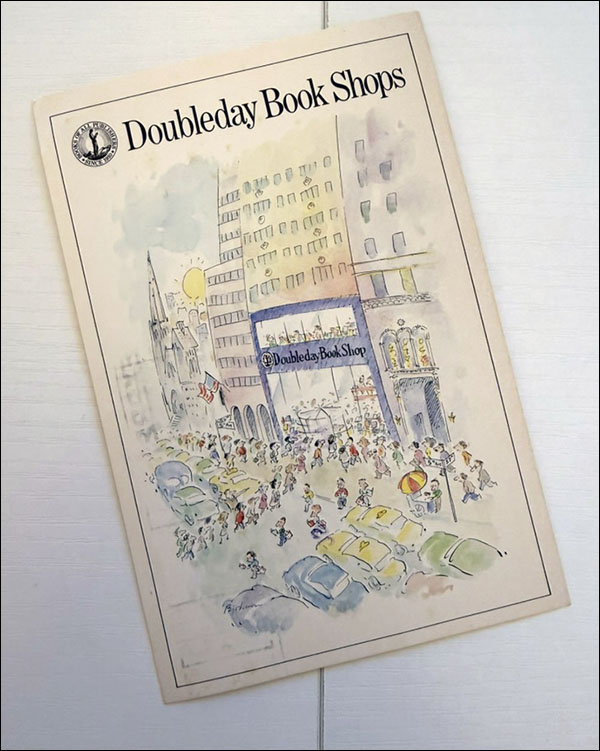
Ah: I know this store. Famous in its day; you can find it in movies. Stayed open late. Hip Smart Manhattanites would exchange knowing looks over the stacks at 11 PM.
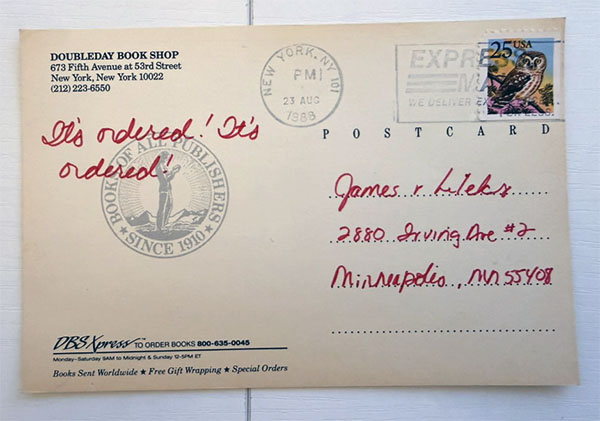
The back of the card:
I’d requested a book, and they sent me a card to say they’d ordered it.
This is a level of retail and human detail we took for granted.
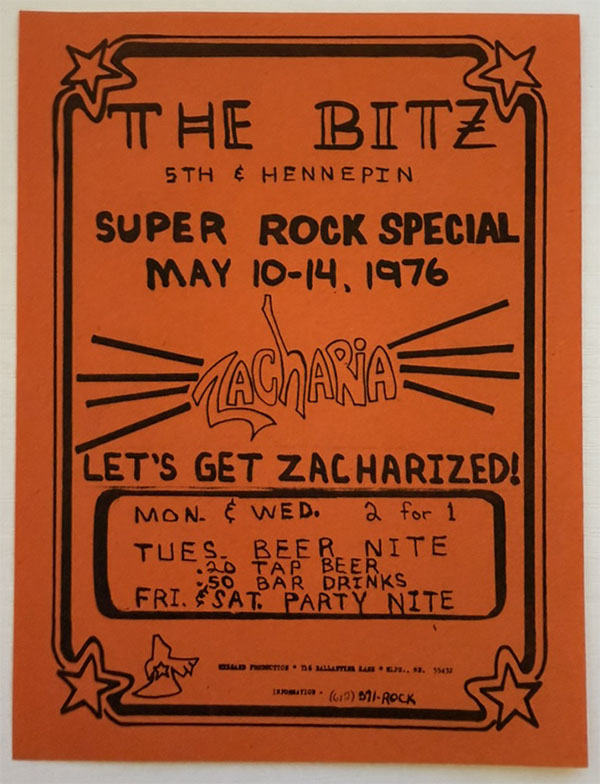
Don’t remember the band or the bar.
What marketing! Mon & Wed, Beer! Also Beer on Tuesday. Fri & Sat? Better believe there’s beer ‘cause its Party Nite!
I think we know how Herr Mahler would've reacted.
Not a fan of Smart Quirk, if it’s self-conscious and overly pleased with itself. Widows Bay is Smart Quirk, but the first episode earned its self-regard. For the first half hour I couldn’t place the main actor, who’s playing - more or less - the mayor of Minneapolis except he’s in charge of a small haunted island he doesn’t believe is haunted. (Not the literal mayor, but he has the glad-handy lightweight nature of our dear leader.)
WHERE had I seen him?
To my surprise: he was Perry Mason.
The least likely Perry Mason. Nothing about the show felt like Perry Mason, although it made a variety of good decisions: it went back to Scrappy Perry instead of stolid embodiment of the law; it updated all the supporting characters with imagination, particularly Paul Drake as an African-American and Hamilton Burger as a bitchy, highly intelligent and capable prosecutor. The only problem: Perry wasn’t an attorney for the entirety of the first season. The art direction was superb. I can understand why they decided to go back to the 30s, but it just didn’t feel authentic - even though it was more authentic. Probably why it only lasted two seasons.
Why aren’t there shows set in the Fifties? Hard-boiled, sharp lawyer shows? Do we have to wait for AI to get good and cheap before people start making shows rich in period detail from the Oughts, the Twenties, and so on - or am I just asking for something no one really wants?
I tried some prompts and apparently Firefly thinks I want a comedy.
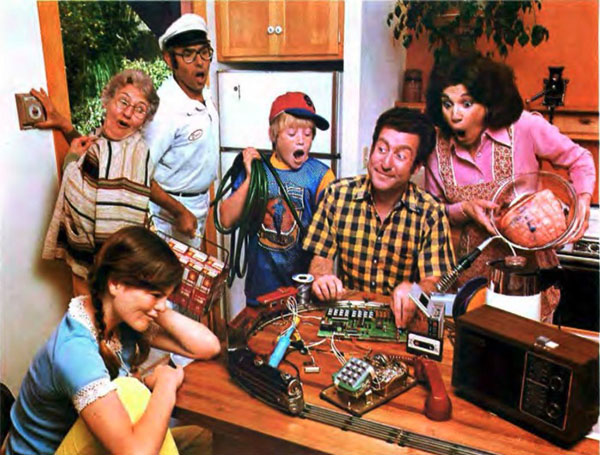
t’s 1984.
This is from a computer mag, and I can't find the whole ad. Does it matter? You get the idea: everyone's watching him use computers and they're ASTONISHED. Grandma is so astonishd she's been distracted from her usual job of messing with the thermostat.
1984: you were still expected to be unsurprised by the appearance of a milkman.
The word had not yet been permanently repositioned:
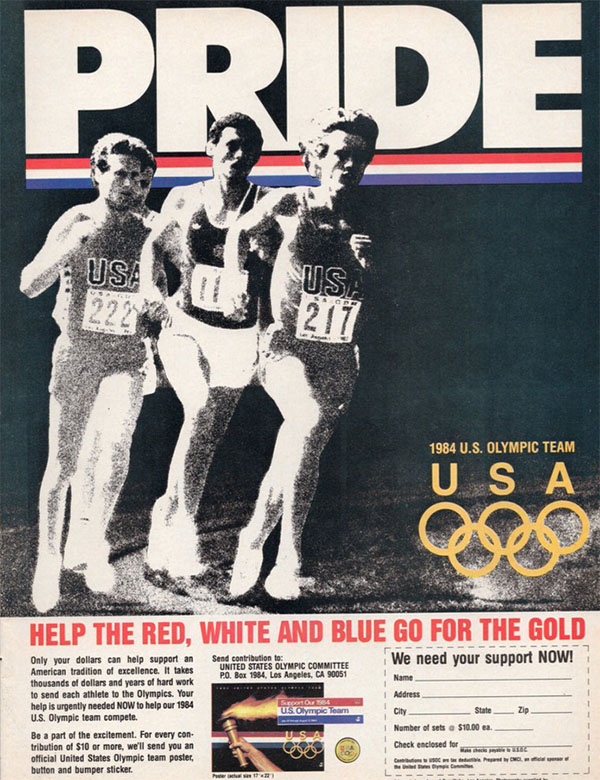
It seems odd to think that they took donations.
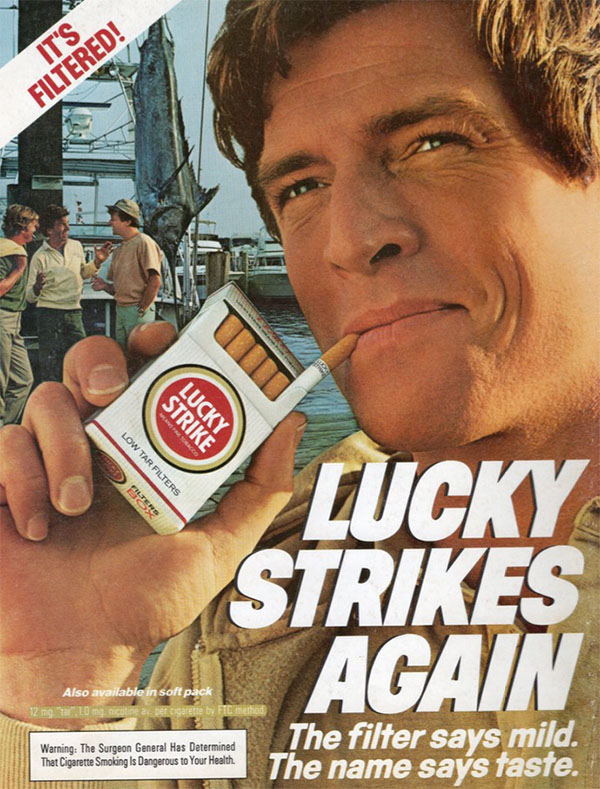
It's filtered! And this . . . is a surprise, in 1984?
I suppose they mention the filter because Luckies were famously unfiltered. I don't know how people smoked straight Luckies. They'd take my head off if I tried one. The filtered versions? Ecch.
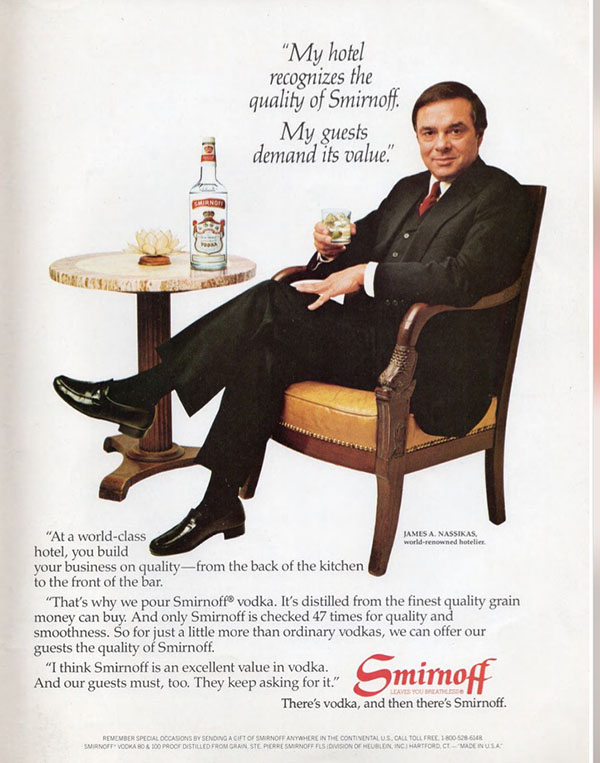
Smirnoff had a long series of ads in the 1960s showing famous people enjoying their quality wudka. So we're supposed to know who this guy is?
Oh, it's James Nassikas! Right!
Who? This fellow. Indeed a noted hotelier. At least people in the business would know him.
Yes, it's 1984, and everyone's nervous about, you know, that.
You can mail away for them! Sure, you can get them at the drug store, but that would be embarassing, because everyone would know you were having sex.
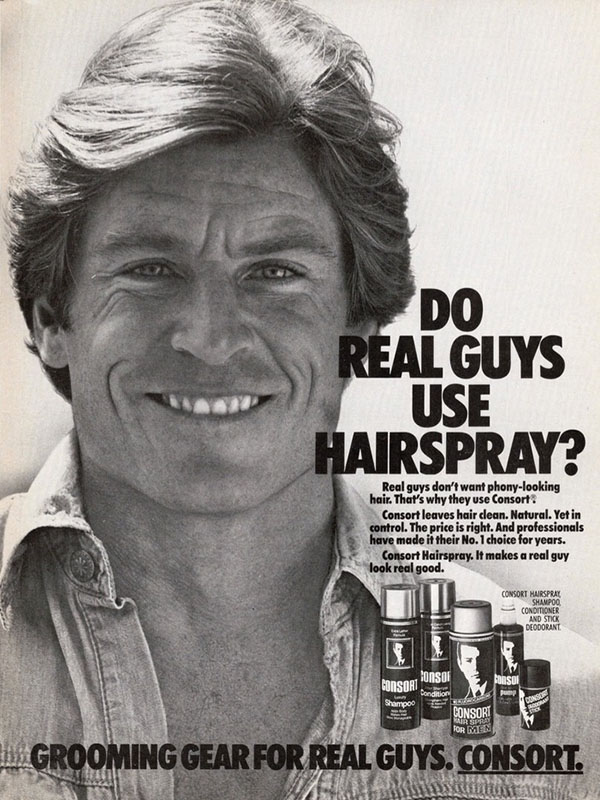
If you were around at the time, you suspect they're traading on the quiche thing.
They still make Consort. Note the disconnect between the ad guy and the can guy. There's a world of cultural shifts in the distance between the two.