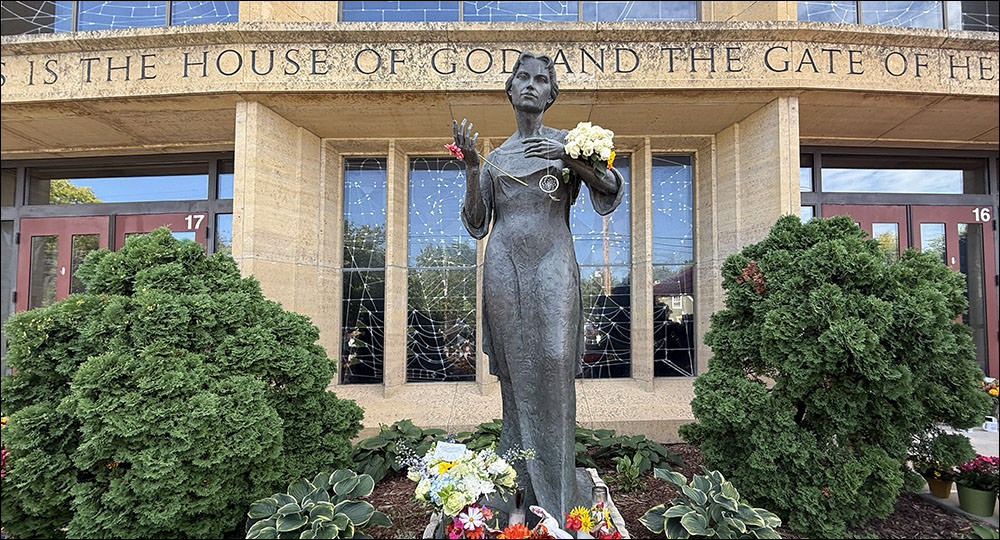
That’s the front of the church.
The trees and sign poles on 54th have ribbons in the school color, from blocks away. Side streets as well. I figured they might be giving them out so I stopped and walked over. This was Saturday. I imagine on Sunday the church will be packed and the last hymn will raise the rafters.
Young girls were handing out the ribbons, and they had a grim, exhausted cast to their faces. When I got there a lady was hugging them and telling them good things and it just made you lock up and mist. The response of the community is not remarkable: it is exactly what I would have expected. As I drove to the grocery store Saturday afternoon there were more kids putting up ribbons. When they’re done there won’t be a street that doesn’t have a signal, a sign, a statement of grief and remembrance.
And at some point they have to come down.
Right? No one ever knows when that is. No one can ever propose it, because to bring up the matter is to suggest it’s settled, or at least the time for all that has passed. It never settles, and it doesn’t pass. But of course it does settle. There will be a day when you look up at the church tower and last Wednesday is not the first thing you think about. There will be an hour when you hear the toll of the bell, a regular sound in the neighborhood along with planes and the ice cream truck and the angelic whine of the electric cars and the random sounds of someone doing a simple act to make things bette, nicer, sharper, cleaner. Mowing or blowing or hammering. The bell will just roll up the hill and linger in the wind and you’ll register it in the back of your head but you won’t think of the church, exactly. Just the familiarity of the bell. I’ll probably be gone by then, moved away.
It takes a while for that first “normal” day, but it happens, and that’s okay. It usually happens before the ribbons go down. What hurts is seeing them frayed and dirty on a stop sign in the raw rain of November. But again, no one wants to say it’s time.
We tied one on the big tree on the corner, and I suppose I’ll have to decide when it comes down.
There’s another church to the north which just issued a jumbled array of clongs and bongs, not on the hour, too short for a wedding. I wonder what that was all about. Usually a bell rings, you know why. You know.
 |
|
 |
|
 |
|
|
Who do we have on WML? Yes, our weekly look at an ancient TV show to which I have become uncommonly attached. It’s the jobs, the special appearances, the look into the grown-up middd-brow yet aspirational culture of well-behaved people wearing nice clothes uttering sentences with concision and good grammar.
We have to address something, though. Bennett Cerf is always merry and twinkling with that publisher’s cred, the sense of a man of letters who’s letting his scant hair down a bit but staying true to his intellectual roots. He’s always described as the publisher of Random House, and the author of a column in This Week magazine.
Shall we take a look at that? Eleven million readers, according to Arlene.
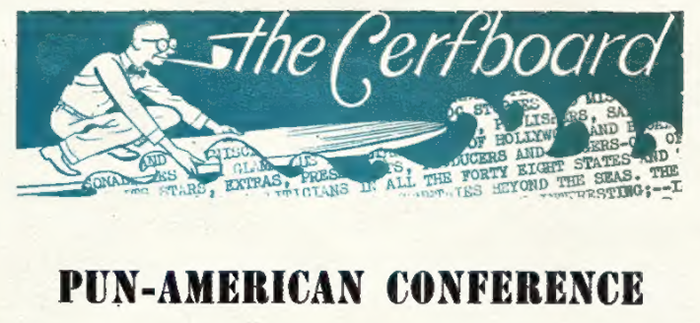
Nice logo.
Here’s the first item. Regular viewers of WML knows he traded in the lowest form of humor, a lot. I don’t know if puns had less of a bad rep, or if he was expected to dish them out in quantity because it had become his brand.
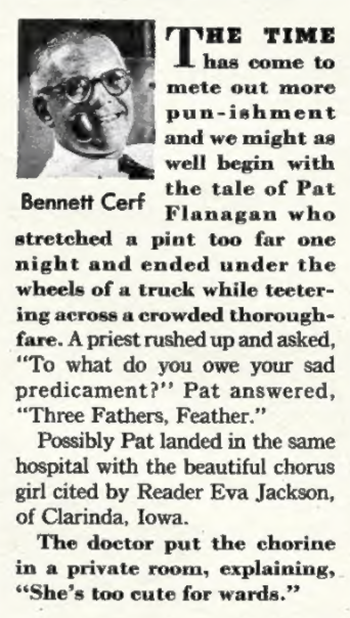 |
Clarinda looks like a charming Iowa town, good material for Main Street. Glen Miller was born there. There's a street named after him. Of course he was out of there by the time he was in grade school. (I wrote "Glen" because he didn't add the second N until he was in high school.) |
|
Well, that’s just one column. Let’s find another.
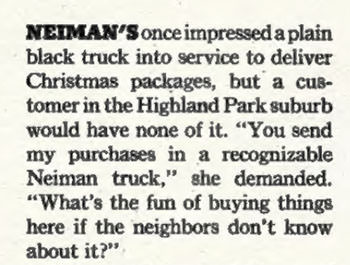 |
Okay well ha ha I guess |
|
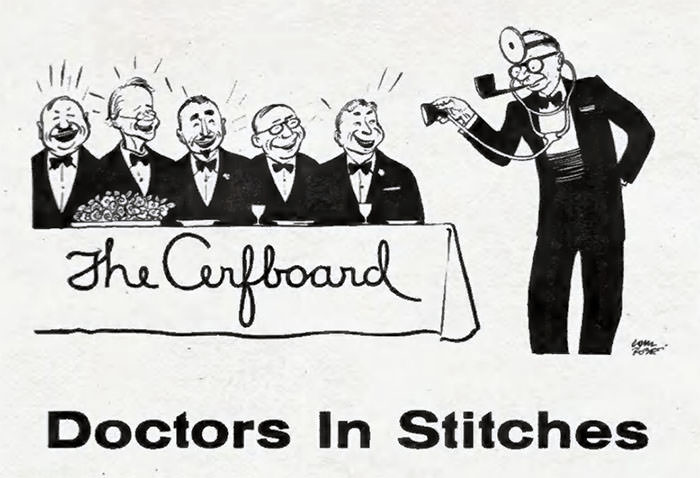
Another issue, another logo:
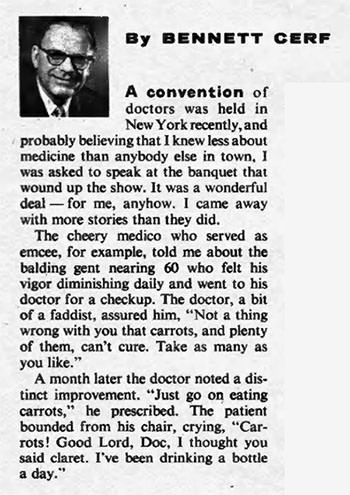 |
It’s all like this. Look, I suspect he was a endearingly cheerful and amiable fellow and a decent chap in general. (Depending on your opinion of the Famous Writers School matter.) I enjoy watching him on WML. But there’s nothing really remarkable about his his wit. |
|
Anyway. I saw this -
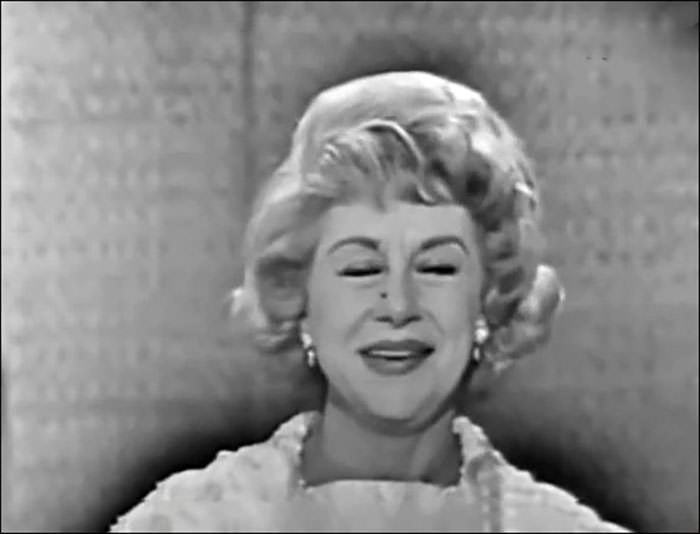
and walked over to the TV to swat away the fly that had alit on the screen. But it wasn’t a fly. It was a blot on the close-up camera. Doesn’t appear in the wide shot or the tight shot on the host and guest. It disappeared later, so someone from the booth saw it and rushed in to clean it, or it’s an artifact from some other situation. But I actually had a magazine rolled and ready as I approached.
Let's get to the challenger, who has just SIGNED IN PLEASE
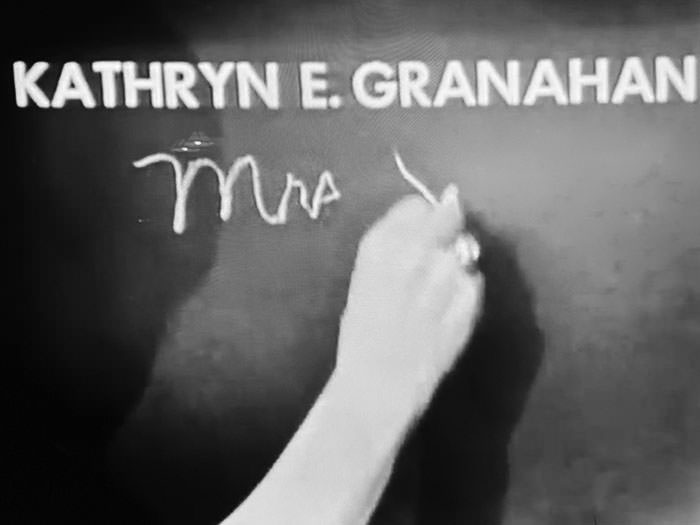
Name this matron’s job:
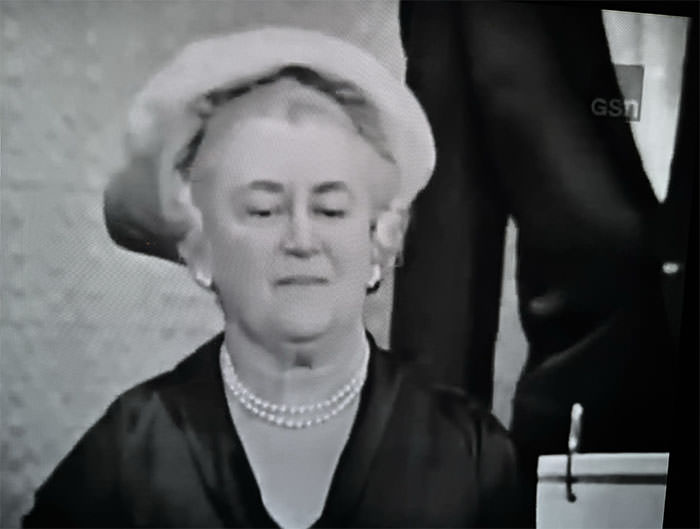
Well:
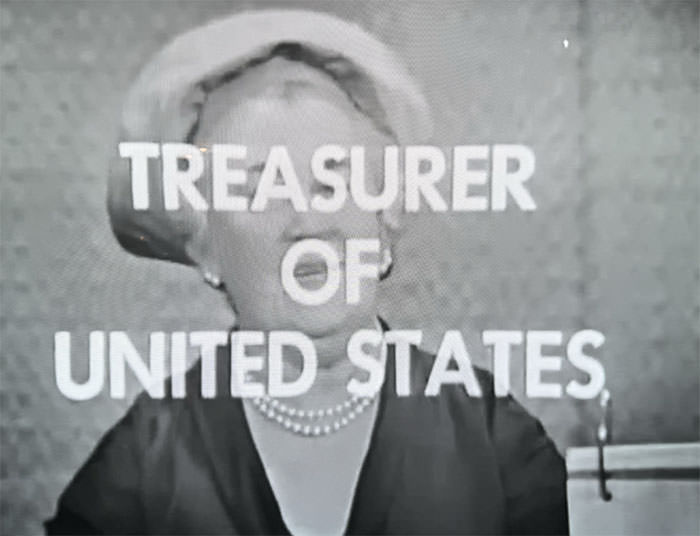
Kathryn Elizabeth Granahan (December 7, 1894 – July 10, 1979) was an American politician. She served as a member of the U.S. House of Representatives from Pennsylvania and was appointed Treasurer of the United States by President John F. Kennedy.
There’s more to the story.
After the 1960 census, Pennsylvania was expected to lose three seats in redistricting. The Democratic Party leadership chose Granahan's seat as one of those to be eliminated. Rep. Bill Green secured her assurance not to run in the 1962 elections. In return, Green convinced then U.S. president John F. Kennedy to appoint her Treasurer of the United States, which Kennedy did.
Hands washed, backs scratched, etc. Well, that’s politics. So what did she do while in the House? Big anti-filth backer. Mandatory jail for smut-peddlers. Also:
Representative Granahan also used her Postal Operations chair to wage a campaign to clean up motion pictures, an industry over which her panel had no jurisdiction, except as movies were often sent through the mails.
She seems to have been on the side of using public campaigns and elevated sensibilities to urge voluntary change, not using gov coercion. Also, brava:
Among her proposals as the fourth woman to head the Treasury was the return of the two-dollar bill to circulation.
I will never understand the failure of that bill to acheive broad acceptance.



It’s 1964.
Elmer would prefer that you slid it, not slammed it.
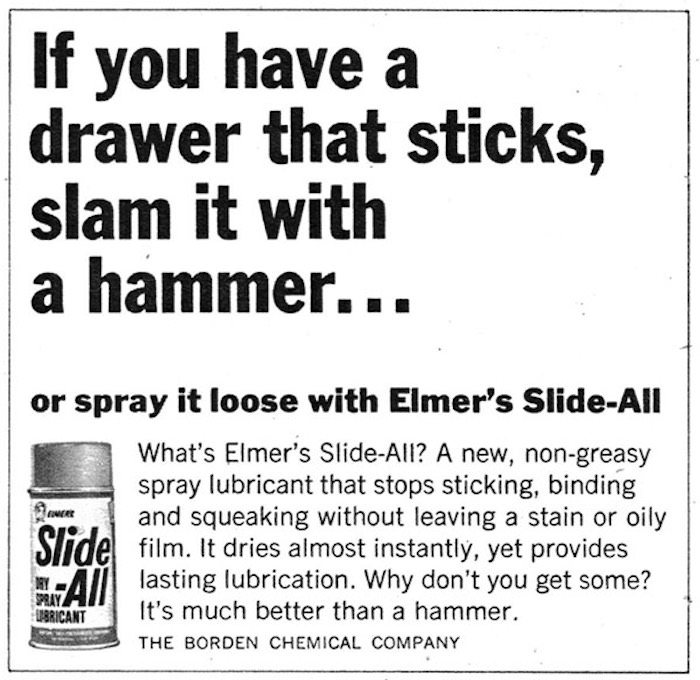
“Borden Chemical” seems a bit poisonous, especially if you think about Elsie and evaporated milk and ice cream and Hemo.
Elmer handled the glue and the industrial stuff. You can find many offers for the stuff online, but it appears to have been discontinued a few years ago. And I'm sure there are still Elmer fans. He was a heavy glue-related presence in my childhood, but because there weren't many Borden ads his relationship to Elsie was indistinct and not commented upon. Grown-ups knew, but us kids? He was just the Glue Bull.

Bigger than what? Oh - the previous can.
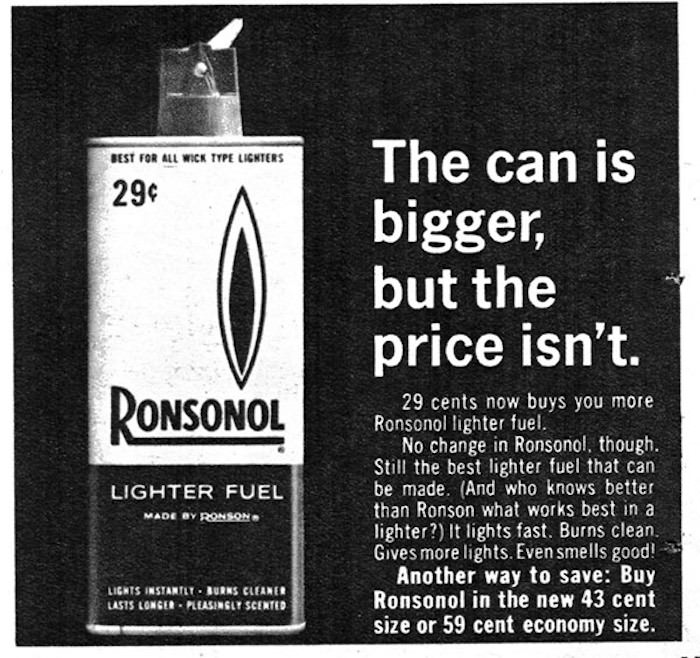
They’re right: it does smell good! And if you overfill your lighter and put it in your pocket, it’ll give you a tingly rash.
Who was the competition for fluid? Scripto? A web search indicates lots of people were in the lighter-fluid business. Gas stations, too.

Jason’s prize reduced to this:
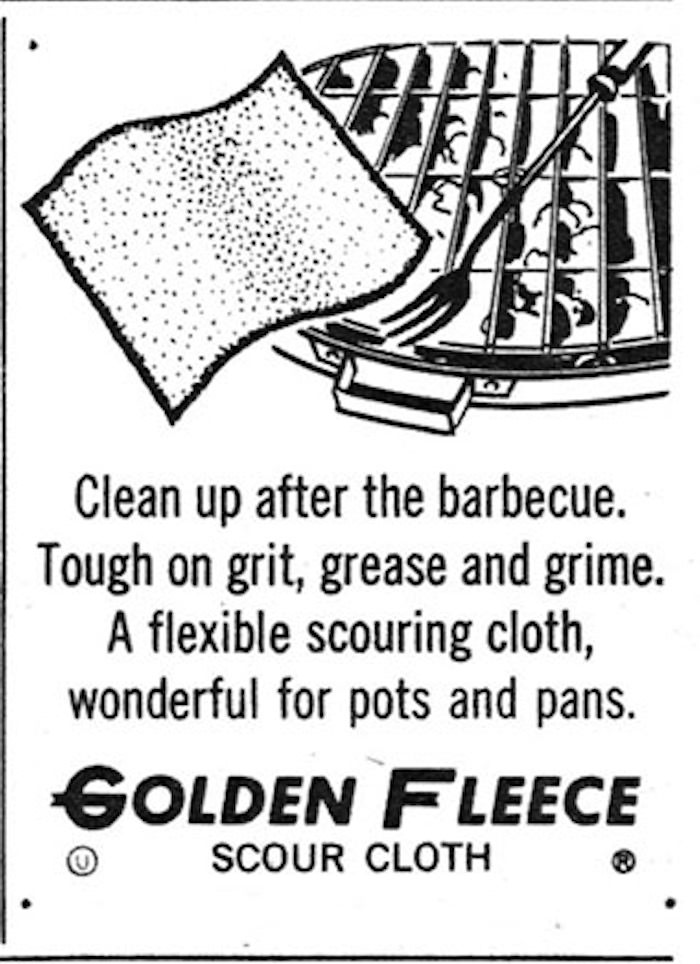
At least people back then knew the reference. Doesn't mean they'd read the source material, but they knew the reference, if only as a cliche or figure of speech.
When you were a kid you realized these were called something other than scissors, and they weren’t scissors, except . . . they were?
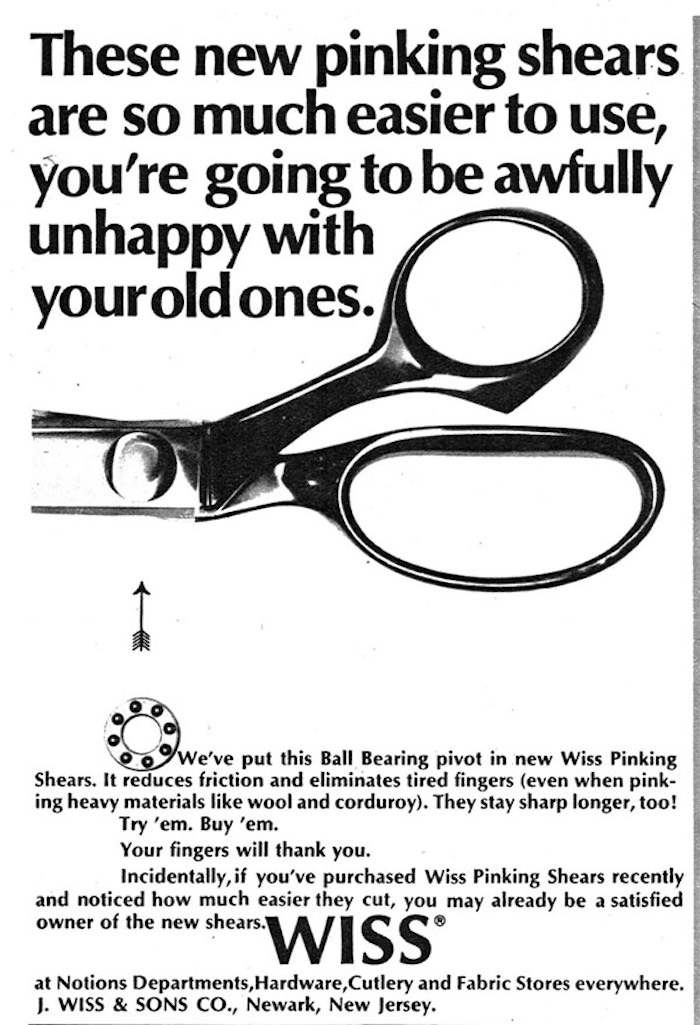
More than you possibly need to know:
Pinking shears are scissors with saw-toothed instead of straight blades. They produce a zigzag pattern instead of a straight edge.
Before pinking scissors were invented, a pinking punch or pinking iron was used to punch out a decorative hem on a garment. The punch would be hammered by a mallet against a hard surface and the punch would cut through the fabric. In 1874, Eliza P. Welch patented an improved design for a pinking iron, which featured a pair of handles.
Thanks, we’ll be heading off now -
The pinking shears design that is most well known was patented by Louise Austin in 1893. In 1934, Samuel Briskman patented a pinking shear design (Felix Wyner and Edward Schulz are listed as the inventors). In 1952, Benjamin Luscalzo was granted a patent for pinking shears that would keep the blades aligned to prevent wear.
Great! Say, look at the time, gotta run -
The cut produced by pinking shears may have been derived from the garden plant called the pink, in the genus Dianthus (the carnations).[9] The color pink also may have been named after these flowers, although the origins of the name are not definitively known. As the pink has scalloped, or "pinked", edges to its petals, pinking shears can be thought to produce an edge similar to the flower.
The verb "pink" dates back to 1300 meaning "pierce, stab, make holes in”.
Well, that’s useful. Glad we stuck around. Now we know where the name comes from: the sight of blood after you stabbed someone.
They’re still hawking these old things?
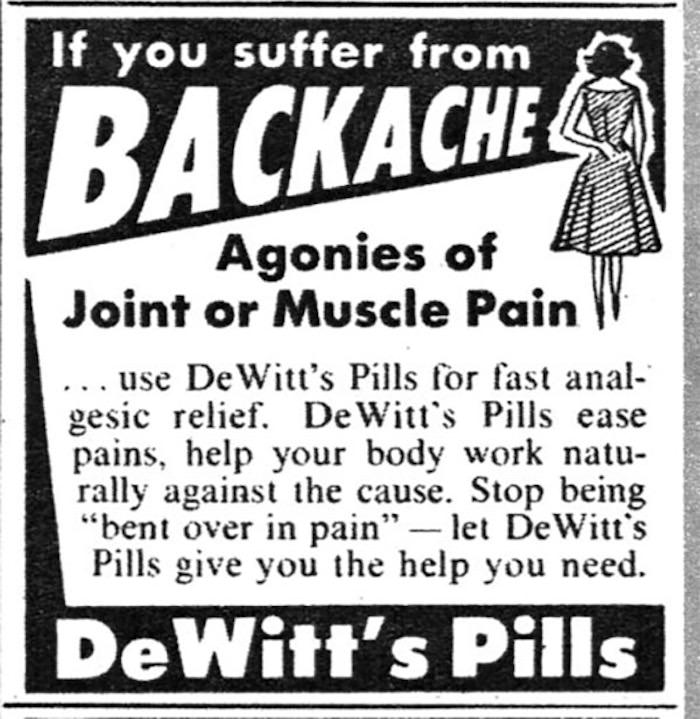
It was a kidney stimulant. At least that was the original claim. Perhaps they reformulated and tossed in some aspirin.
These were all the rage when I was young. The name, and the dog.
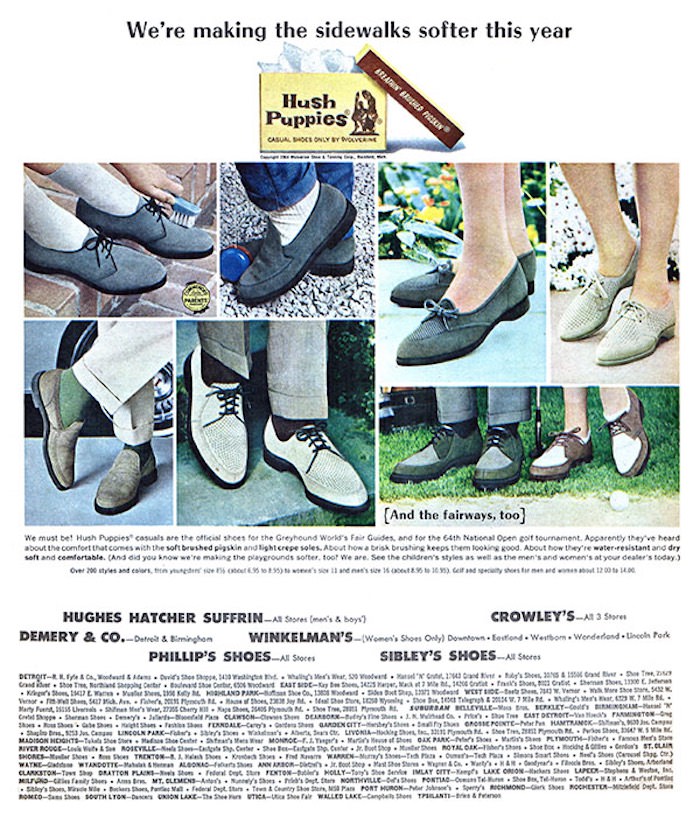
Still around, and pretending they’re just as popular:
Hush Puppies is the go-to footwear, accessory and apparel brand that delivers the right mix of timeless style, dependable comfort and quality. Since 1958, the brand has defined authentic casual style for generations of consumers around the world. Today, Hush Puppies is the favorite shoe for all who embrace the lighthearted spirit and modern style of this iconic brand – represented by our lovable basset hound! We invented casual style, you make it your own. Hush Puppies.
Thanks! Well, gotta shove off -
Hush Puppies was founded in 1958, an era where uncomfortable dress shoes were your only choice of footwear – even on the weekends. When we said we invented casual, we weren’t kidding. We set out to find a solution for sore feet, otherwise known as “barking
dogs.” Introducing the world to casual shoes and a more casual lifestyle, we created shoes to help them hush their puppies. We’ve stood for comfort from the beginning, and we continue to innovate through our Bounce Technology platform today.
C'mon, Dad, join the ranks of men who spoil every event by telling everyone to stop while he gets the camera ready, and makes company watch the movies when they come over for bridge:
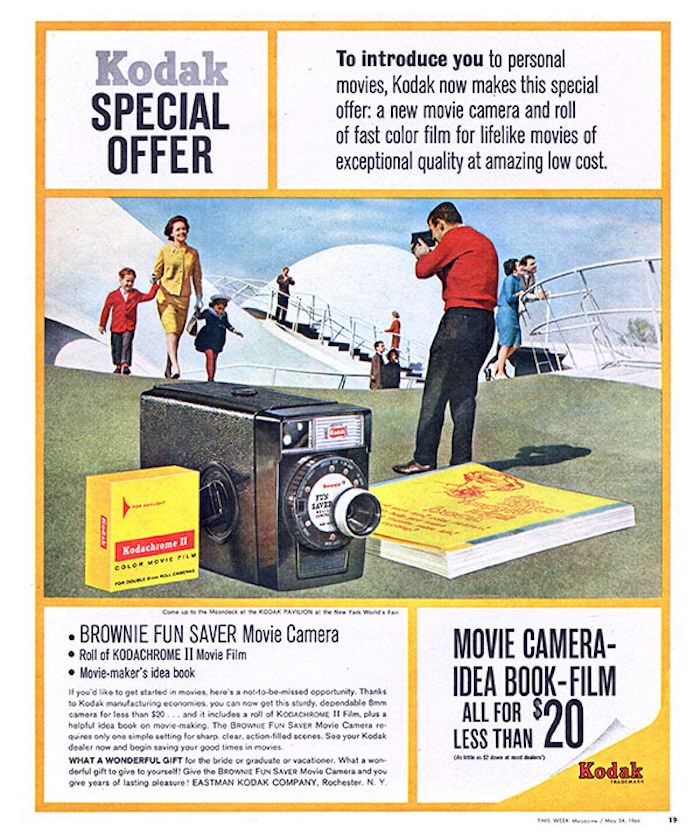
The Fun Saver!
That’s the Kodak Pavilion “Moondeck” at the New York World’s Fair.
What a time to be alive, and have a family.

That will do for today, except of course for the updates and the latest chapter in the Joe Ohio story, over at the paid section of the Substack. Thank you for your patronage, as always.