On Saturday I felt the ancestral pull to visit the U. I don’t know why, but I thought “I could probably get some good fall art for the Bleat if I go to the old campus,” and so I went to Dinkytown. There was some homecoming event going on, I think; lots of parents, and students walking in front of their parents. Tall boisterous students claiming Dinkytown as their own, as if it had been constructed last spring in anticipation of their specialness.
The Old Campus used to be the entire campus. It sprawled south and east for decades, leaped across the river in the 60s, but the heart of the U will always be the cluster of old buildings around the expanse of grass, hemmed in by an iron gate and the broad hard moat of Washington Avenue. I saw a squirrel, and thought: hello, Elmo.
Someone in the 70s invented Elmo the Squirrel as a character in the Daily newspaper’s weather column. The exploits of Elmo varied, depending on whether the person writing the piece had any imagination; more often than not, they were rather tiresome examples of strenuous whimsy. But it was a tradition.
I visited one of my favorites, the old Library, Burton Hall. It’s as Greek as Greek can get.
This was a holy place on hallowed ground for me when I first went to the U. Also, it was a dump. But: it was everything I wanted from a college campus, namely classical architecture with sculpture that praised sculpture.
And my other love, architecture!
Architecture sculpture on architecture. How perfect.
I don’t know how many pass this building and fail to realize the significance of this:
Leroy Buffington - or Bvffington, if you wish - was a local architect who had a few great buildings, made a proposal for a fantastic skyscraper that was never built, and oh by the way invented the skyscraper, by way of patenting steel-beam construction. He never saw a dime until another local man - well, back up. Rufus Rand grew up in Loring Park, where the Buffman built a grand mansion, and then Mr. Rand went off to WW1, became a flying ace, returned home to run the family utilities business, then built a flagship Moderne corporate HQ downtown with Art Deco motifs that emphasized the romance of air travel. He paid Buffington royalties for the steel-frame construction, possibly the only one to do so.
I ran my hand across the name and thought: you’re not forgotten.
But of course for the most part, he is. The building faces a statue of a man who’s not been dropped in the Marianas Trench of History:
That’s one of your Pillsburys there. As in the Doughboy company. There’s a compact sense of completeness in the area, with the old men and old names nodding at each other in literally stony silence for over a century. It’s changed not a bit since I got here.
I walked back through Dinkytown, amazed as usual that the ghost signs I knew when I went to the U are still visible.
Then I went home and took a nap, because we were going . . . clubbing!
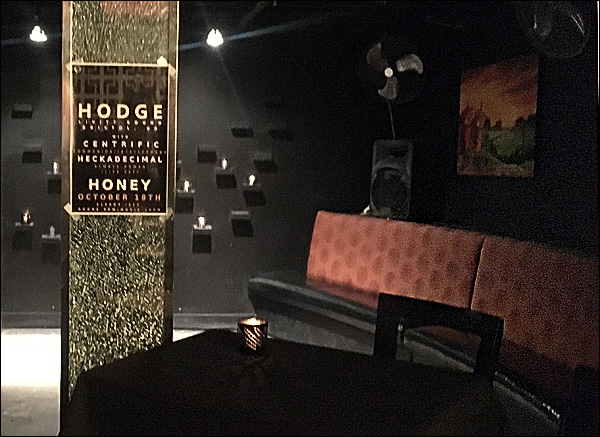
Well, not exactly, but close. Took daughter to her Homecoming photo shoot at the bandshell; many of the kids were wearing retro-vintage rock outfits, and that meant they were cold and wet. The rain had rolled in, the temps had dropped, and there was a mean hint of winter in the air. Went home, and wife and I drove through torrents to get to a bar on North Hennepin, where a friend was performing. The club was in the basement. So you get that immediate flashback to all the venues of your earlier going-out days.
The band was all middle-aged, veterans of the local scene, as they say. The drummer played with Brian Setzer. The guitarist and sax player had played with EVERYONE. Our friend is in five bands, and was the bassist for our pick-up school band.
The singer had studied every possible blues style from every possible Black singer, and it was amusing to hear him sing “None of us are free if one of us in chains” over and over while the audience woooooed, because the audience seemed to be mostly friends of the band or friends of friends, and was white, 50-something, and not exactly in an unfree condition. The guitarist had a hollow-body with a tube amp and some amazing sounds, and I talked to him between sets; he showed me his rig, which was this jury-rigged compilation of pedals and effects generators. It was his invention.
People are amazing.
I have to note the condition of the bathroom, though.
This is the mirror.
Rather defeats the purpose. It reminded me of the era in which I would take something like this as a sign I was having a genuine authentic experience. The grit! The smell of urine and spilled beer! The band stickers, man. Now I don’t know if it happened organically, or if management turned a few people loose with Sharpies and said “make it real.”
A sign on the stall wall. Ur-Minnesota: copy edits and editorial demurrals.
At one point in the second set, during a song about Ezekial and Judas and other Biblical figures that connote Soul and Old Time Rural Church Can I Get an Amen Jaysus Versimilitude, the singer growled “It’s either Yawweh” and I thought no don’t please no, because you’re going to sing “It’s the Highway,” but that’s what he did, and everyone wooed and cheered and uttered a yeah! because everyone here, even in their greying state, was GETTING. DOWN in a dim room, and hence was still with it.
Well, I didn’t like the blues when I was 20 or 30, so I’m still true to myself. The singer-songwriter is certainly a better singer than me by a factor of 9000, but I couldn’t shake the resemblance to Matt Barry.
My greatest regret is not being in a band.
Note: I really have no regrets. About anything. Regrets are self-indulgent. It’s your way of saying “judge me by my better aspirations Judge me not by my shortcomings and mishaps, but by my recognition of them.”
Drove home and let Birch out of his kennel. Hello adorable warm loving furry transitional object for parental emotions! Yes we love you yes we do. He was happy to see us, and went outside to pee. The rain started up again while he was sniffing around the perimeter; the wind kicked the temps down the stairs again, and the middle of October suddenly felt like the start of raw, empty November.
Bzzz text: Daughter. Informing me that the post-Homecoming dance crew was going to Perkins. I told her to have the Twinberry syrup on her pancakes. She did not know what Twinberry was.
The shade of Leroy Buffington nods, understanding. They forget, in time. Everyone forgets everything, in the end. Do what you can while you can. It’s all a something-something analogy to that mirror? Surely you can work that in and tie it all together. Reflection, forgotten bands, something?
Sorry, Leroy. It was just an interesting Saturday. Doesn’t have to mean anything more than that.
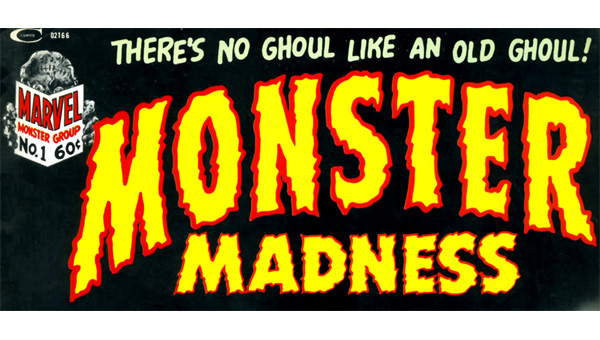
Marvel had a regrettable monster phase in the early 70s - but you can't blame them. They were following what the audience wanted. In the case of this magazine, they revived the crappy juvenile 60s books that put "funny" captions on Monster pictures. Why? Because of Madness, of course.
I've chosen these for one reason: they probably make no sense to anyone half my age. Not because the humor has changed, but because they reference common cliches that everyone knew, until everyone didn't.
It's a reference . . . to this.
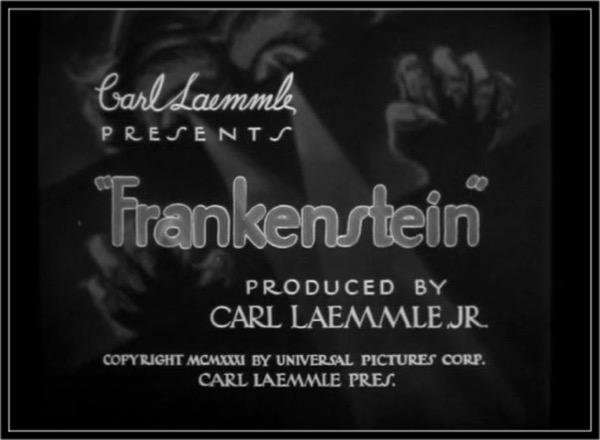
It behooves us now and then to go all the way back to the beginnings, and ask the question: it's a classic, but is it great?
Eyes, because eyes are creepy. A monstrous face that may or may not appear in the movie. You know what you're in for.
But then again, audiences already knew. Only 21 years earlier, someone else did one.
It wasn't the best example of storytelling.
As they say in the business, show, don't tell. The monster gets no close-ups - it's 1910, after all - and the drama mostly consists of the waving of hands.
That's the earliest film Monster. In a mere two decades, the art of cinema had evolved quite nicely.
I don't know if the graveyard scene that opens the movie is the first such setting; can't be. But it's so well-shot, so gloomy and dank, you realize that you're looking at something that can't be improved upon, only done in a different way.
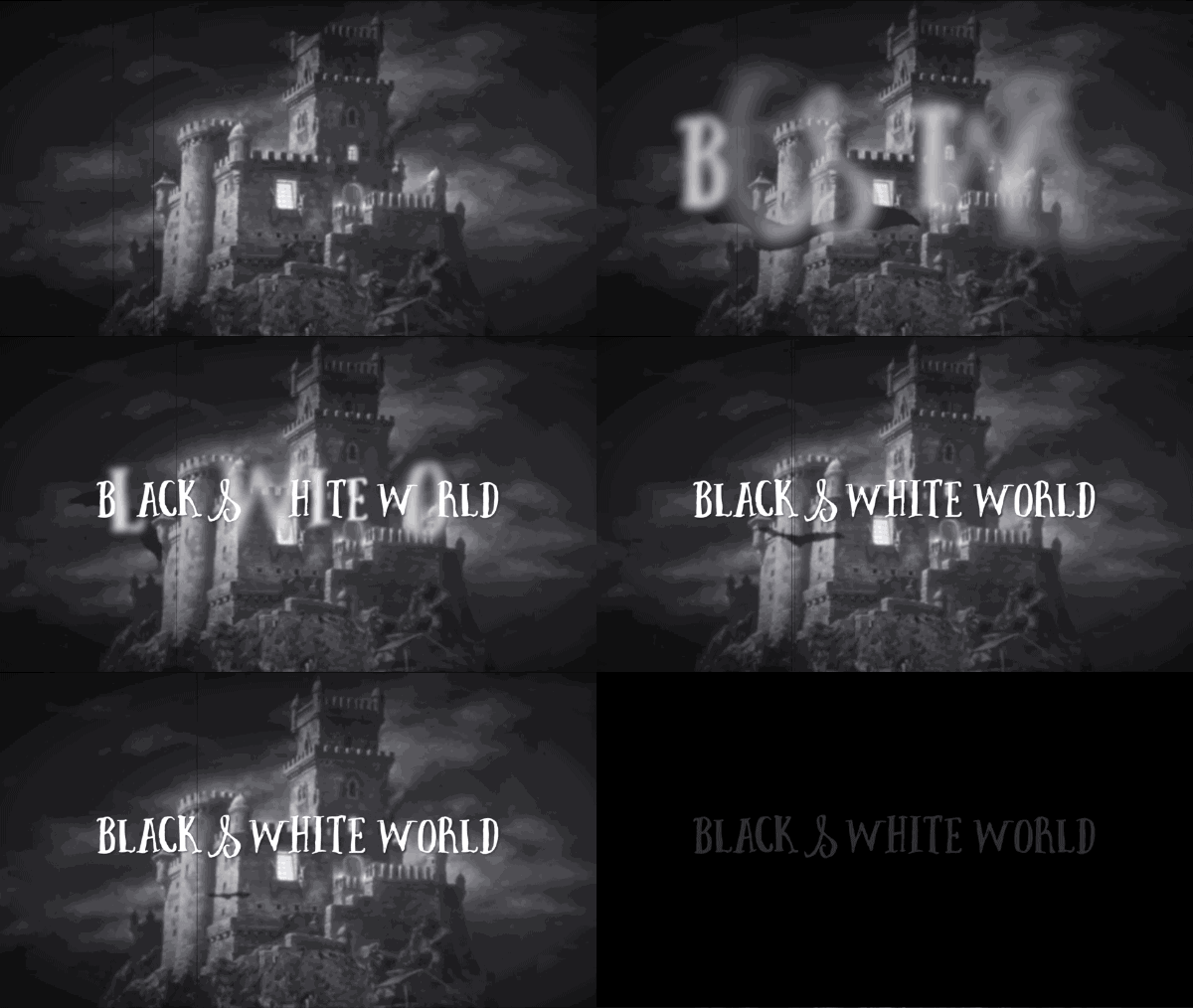
A shot it's almost impossible to do today, because it would be a joke now. The surreal, improbably mountain castle. Something from a nightmare:
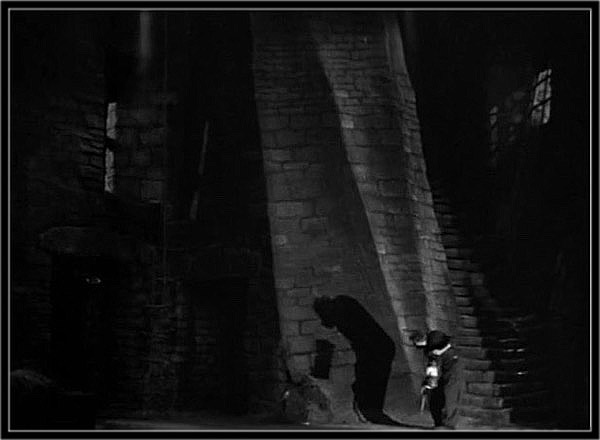
Rooms and buildings that make no sense:
The famous lab. The audience must have been so intrigued by what was happening that they never thought: why does this space exist?
Why did they build a place like this? It doesn't matter: it casts great henchman shadows.
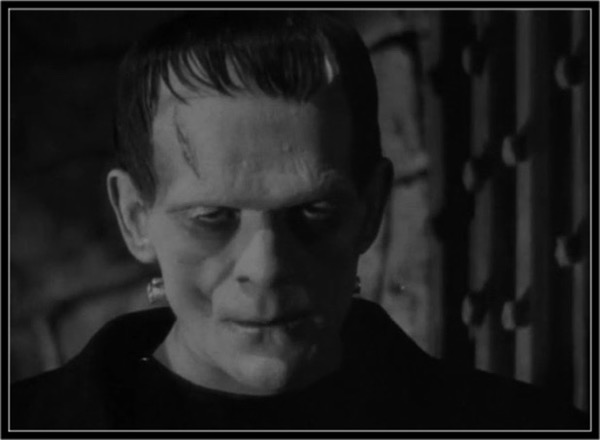
The mood is set. The storm arrives, and the Monster is brought to life in a sequence without music - something they'd alter in the next movie to tremendous event. The Monster is not revealed at the time. That comes later, when he's summoned into the room. And it's fantastic.
He's riveting - you can't take your eyes off him, even though it's one of the most famliar visages of the 20th century. To see it anew, to see it and imagine how people saw it for the first time, restores its original power as much as possible.
You also sense something else: the humanity Karloff invested in the character, right from the first moments we meet him.
This scene is famous, but misunderstood by some.
It must have been mortifying at the time, because people didn't know what was going to happen. Surely that wasn't going to happen, though. Then it did.
Things like that didn't happen in movies.
Contrary to the later iterations of the big bad scary creature, the Monster is confused and frightened by what happened - horrified by himself, if you will.
The non-Monster portion of the movie are a bit wan, static, and boring. It's the end that matters, and once again it's the template for everything that comes afterwards, the things they can't really do any more, because it's become a cliche. Knowing all that, it still works.
It's horrifying, and tragic, and absolutely effective, thanks to Karloff. But here's the detail I want to note. IMDB:
The set design of the windmill sequence was inspired by a building in Los Angeles that housed a local bakery, Van de Kamp, which displayed a large windmill as its corporate logo.
Yes. Same company.
Number of seasonal tie-ins they ever did, capitalizing on this big of history. None.
That'll do! See you around. Don't know if it's much of a milestone . . . but today we have the 200th matchbook in the hotel section.